
If you have ever kicked off your shoes before a long drive or hopped in the car barefoot on a hot summer day, you have probably wondered at some point whether what you are doing is actually legal. The myth that barefoot driving is illegal is one of the most persistent and widely believed traffic misconceptions in the United States, and it gets passed around in driver’s education classes, parking lot conversations, and social media threads as though it were established law. The reality is considerably simpler and more permissive than most people expect.
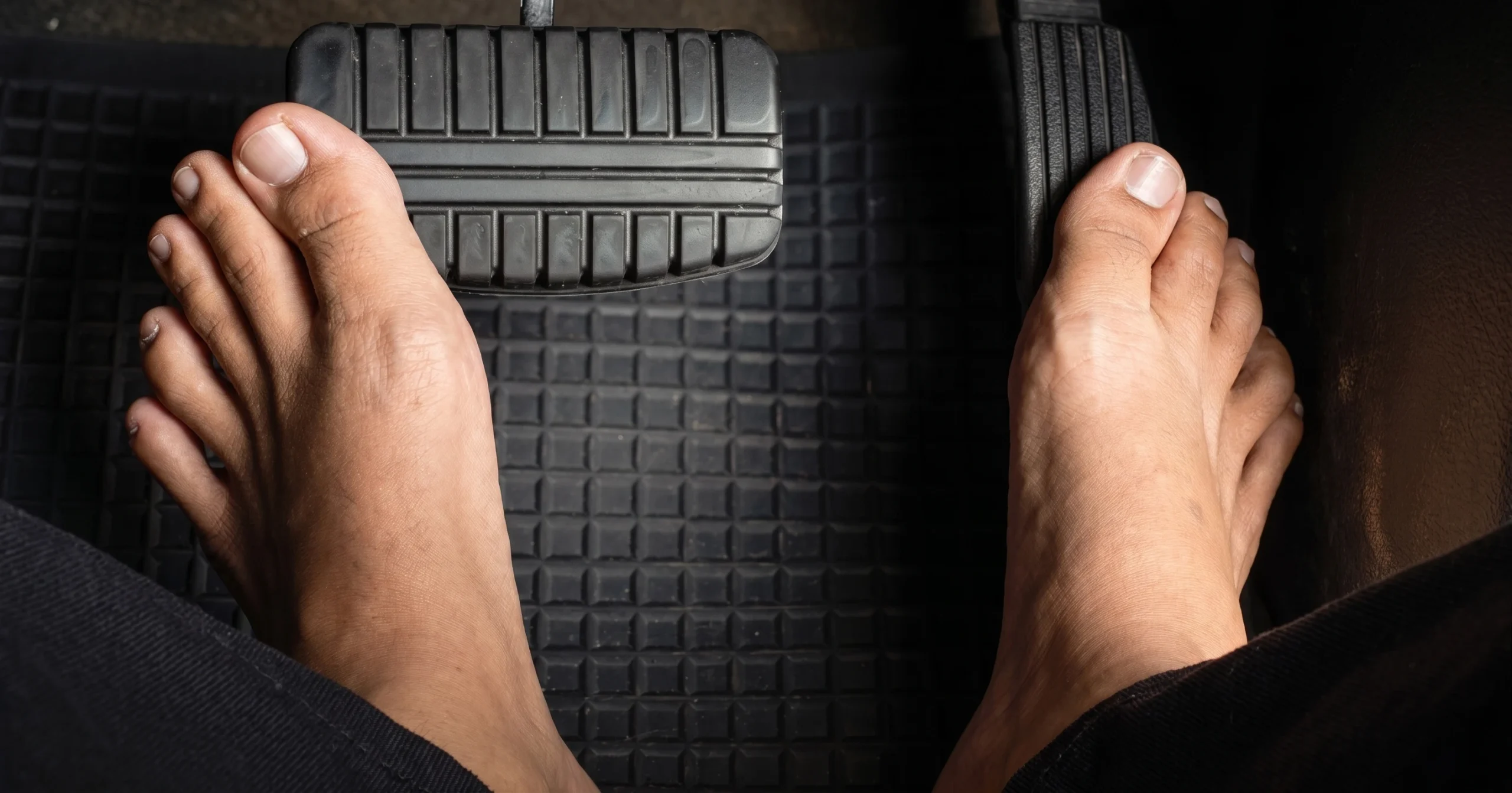
Driving barefoot in Texas is completely legal. There is no state statute, no local ordinance, and no federal regulation that prohibits any driver from operating a vehicle without shoes. That said, legality and safety are two very different conversations, and understanding both is important for any Texas driver who wants to protect themselves behind the wheel, and if a barefoot-driving-related accident does occur, a houston auto accident attorney can help you understand your legal options.
Is Driving Barefoot Illegal in Any State?
No. Barefoot driving is legal in all 50 states, and no such law exists at the state level anywhere in the country. The confusion likely traces back to driver’s education programs that discourage barefoot driving for safety reasons, not legal ones, and that guidance got misremembered over time as an actual legal prohibition. The Texas Department of Public Safety confirms that no footwear requirement exists for Texas drivers, and law enforcement cannot cite a driver solely for operating a vehicle without shoes.
What Are the Safety Risks of Driving Barefoot?
Just because something is legal does not make it the smartest choice, and barefoot driving carries genuine safety considerations that every driver should understand before making it a habit.
- Reduced pedal grip: Bare feet, especially when sweaty or damp, can slip off brake and accelerator pedals more easily than shoes with flat soles and traction, reducing reaction time in emergencies
- Decreased braking force: Shoes allow drivers to apply more consistent and sustained pressure across the entire pedal surface, while bare feet may reduce the force and precision of hard braking when it matters most
- Injury risk in a crash: In the event of a collision, bare feet have no protection from broken glass, twisted metal, hot surfaces, or debris that commonly result from an accident
- Debris and floor hazards: Small objects like gravel, bottle caps, or floor mats can slip under bare feet and interfere with pedal operation in ways that a shoe sole would prevent entirely
- Distraction potential: Trying to adjust foot position on unfamiliar pedal surfaces while driving can create a momentary distraction that contributes to reduced awareness of the road
Can Driving Barefoot Affect Your Car Accident Claim in Texas?
This is where barefoot driving shifts from a simple safety conversation into a legal one, and it is something every Texas driver should understand before making any footwear decisions behind the wheel.
Under Texas Civil Practice and Remedies Code Section 33.001, Texas follows a modified comparative fault rule where your compensation is reduced by your percentage of fault, and if you are found more than 50 percent responsible, you lose the right to recover anything at all. If an insurer or opposing attorney can argue that barefoot driving contributed to delayed braking or reduced pedal control, your assigned fault percentage could increase significantly even if you were not the primary cause of the accident.
- Insurance adjusters may use barefoot driving as a factor in assigning partial fault to reduce the payout on your claim
- Opposing attorneys can raise barefoot driving during litigation to argue that your own choices contributed to the accident or to the severity of your injuries
- Even if a police officer cannot cite you for barefoot driving, it can still be raised as a contributing factor in a civil personal injury case, where the evidence standard is lower than a criminal case
What Footwear Is Actually Dangerous While Driving?
Barefoot driving is legal, but certain footwear choices carry their own pedal control and reaction time risks that are equally worth understanding.
Flip Flops and Sandals
Flip flops are widely considered more dangerous than bare feet because they can slip off, slide under pedals, or catch on floor mats at critical moments. A flip-flop caught between the accelerator and brake pedal is a genuine accident hazard that has contributed to real collisions. Many safety organizations recommend removing them before driving entirely.
High Heels
High heels change the angle of the foot on the pedal, reduce stability, and make accurate pressure application significantly harder during both normal driving and emergencies. The elevated heel prevents the foot from resting flat, reducing the ability to feel and modulate braking pressure precisely. Many drivers who regularly wear heels keep a pair of flat shoes in the car specifically for driving.
Thick Soled Boots and Platform Shoes
Very thick soles reduce sensory feedback from the pedal surface, making it harder to gauge how much pressure is being applied to the brake or accelerator. Heavy work boots and platform shoes also slow pedal transitions between the brake and accelerator compared to thinner soled footwear. Drivers wearing thick-soled footwear should consciously adjust their driving habits to compensate for the reduced pedal sensitivity.
How Does Barefoot Driving Affect Fault Under Texas Law?
Texas law does not penalize barefoot driving directly, but in the context of a personal injury claim following an accident, the circumstances of how you were operating your vehicle become part of the overall evidence picture that determines fault and compensation.
- If evidence suggests that barefoot driving contributed to slower reaction time or reduced braking effectiveness, insurance companies will use that argument to assign partial fault to you under Texas comparative negligence rules
- The more severe the accident and the injuries involved, the more scrutiny every detail of driver behavior receives, including footwear choices that might seem minor under normal circumstances
- An experienced attorney can challenge unfair fault assignments that attempt to use barefoot driving as a pretext for reducing what an injured victim is entitled to recover under Texas law
If you were involved in a car accident in Texas, regardless of what you were or were not wearing on your feet, understanding your rights and having experienced legal representation protecting your claim from the very beginning makes a decisive difference in the outcome.
Why Legal Representation Matters
Insurance companies look for every possible reason to reduce what they pay on a personal injury claim, and seemingly minor details like footwear can become significant leverage points in fault negotiations if you do not have an attorney advocating on your behalf from the start.
- Challenges any attempt by insurers to use barefoot driving as a pretext for assigning unfair partial fault that reduces your compensation
- Investigate the full circumstances of the accident to establish that the primary cause was the other driver’s negligence rather than any choice you made
- Handles all communications with insurance adjusters so nothing you say is used out of context to increase your assigned fault percentage
- Calculates the full value of your damages so that any fault reduction that does apply affects the largest possible starting number
- Prepares your case for trial from day one, so insurers know there is a real consequence for refusing a fair settlement offer
Injured in a Texas Car Accident? Contact Trial Ninjas
Whether you were wearing shoes, sandals, or nothing on your feet at all when your accident happened, what matters most is that you were injured because of someone else’s negligence, and you deserve fair compensation for everything you have lost. At Trial Ninjas, Gia Samavati builds every case trial-ready from the very beginning and fights back against every tactic insurers use to reduce what our clients recover. Contact us today for a free case evaluation with no fee unless we win.
Key Takeaways
- Driving barefoot is completely legal in Texas and in every other state across the United States
- No Texas statute, local ordinance, or federal law prohibits operating a vehicle without shoes
- Barefoot driving carries real safety risks, including reduced pedal grip, decreased braking force, and injury vulnerability in a crash
- Texas comparative fault rules mean barefoot driving can be raised as a contributing factor in a personal injury claim, even though it is not illegal
- Flip flops, high heels, and thick-soled boots all carry their own specific driving safety risks that are equally worth understanding
- Having an experienced attorney protects you against unfair fault assignments that use footwear choices to reduce your compensation after an accident